
Most emergencies happen without warning. A coworker collapses at the office, a child begins choking at a family gathering, or someone slips and suffers a serious injury on a Toronto sidewalk during the winter. In those moments, waiting for paramedics isn’t always enough—the actions taken in the first few minutes can have a significant impact.
That’s why Emergency First Aid CPR/AED Level C (Basic First Aid) remains one of the most sought-after workplace and personal safety certifications in Toronto. Whether you need it for employment, volunteer work, or simply want the confidence to help others, this nationally recognized Canadian Red Cross course teaches the essential skills needed to respond during common medical emergencies.
At Heart2Heart CPR, participants receive practical, instructor-led training designed to build confidence through real-life scenarios and hands-on practice.
What Is Emergency First Aid CPR/AED Level C?
Emergency First Aid CPR/AED Level C, often referred to as Basic First Aid, is an introductory first aid certification that equips participants with the knowledge to recognize emergencies, provide immediate care, and assist an injured or ill person until professional medical help arrives.
Unlike more comprehensive first aid programs, this course focuses on the most common emergencies that people are likely to encounter at work, home, school, or in public.
It also includes CPR Level C and Automated External Defibrillator (AED) training, allowing participants to respond to cardiac emergencies involving adults, children, and infants.
Why More Toronto Residents Are Getting Certified
Toronto is a city where millions of people commute, work, study, shop, and participate in community activities every day. From office towers in the Financial District to schools in North York, restaurants in Midtown, construction sites in Etobicoke, and recreational facilities across Scarborough, emergencies can happen anywhere.
Many employers now require employees to maintain current first aid certification, while others encourage staff to become trained as part of workplace health and safety initiatives.
Outside the workplace, parents, grandparents, coaches, teachers, and volunteers are also recognizing the importance of knowing what to do before emergency responders arrive.
Skills You’ll Learn During the Course
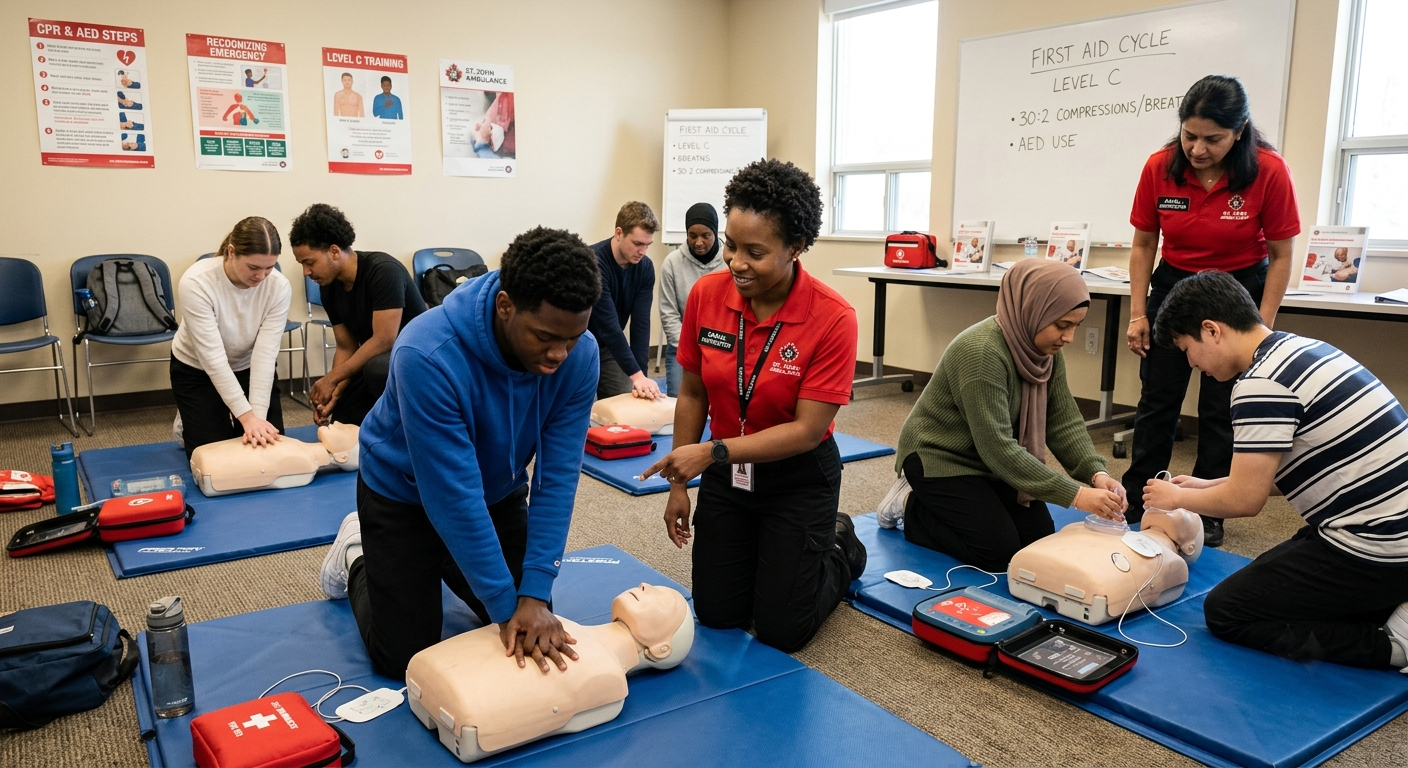
The Emergency First Aid CPR/AED Level C course combines classroom instruction with practical exercises that simulate real emergencies.
Topics typically include:
- Responding to emergency scenes safely
- Activating Emergency Medical Services (911)
- Adult CPR
- Child CPR
- Infant CPR
- Automated External Defibrillator (AED) use
- Choking emergencies
- Severe bleeding control
- Shock recognition
- Heart attack response
- Stroke awareness
- Basic wound care
- Recovery position
- Infection prevention and personal safety
Every skill is practiced under instructor guidance so participants leave with practical experience rather than just theoretical knowledge.
Who Benefits From Basic First Aid Training?
Emergency First Aid CPR/AED Level C is ideal for anyone who wants essential emergency response skills without taking a more advanced first aid program.
Common participants include:
- Office employees
- Retail staff
- Restaurant workers
- Teachers
- Childcare workers
- Camp counsellors
- Coaches
- Fitness instructors
- Volunteers
- Parents
- University and college students
- Community group leaders
- Small business owners
Many Toronto employers accept this certification for positions where Emergency First Aid satisfies workplace safety requirements.
CPR Level C: One Skill Everyone Should Know
Every year, thousands of Canadians experience sudden cardiac arrest outside of a hospital. Immediate CPR combined with the use of an AED can dramatically improve a person’s chances of survival before emergency medical services arrive.
CPR Level C teaches participants how to respond to:
- Adult cardiac arrest
- Child cardiac arrest
- Infant cardiac arrest
- Choking emergencies
- Breathing emergencies
Participants also learn how to confidently operate an Automated External Defibrillator, devices that are now commonly found in office buildings, schools, shopping centres, sports facilities, airports, and community centres throughout Toronto.
Learning Through Real Practice
Watching videos or reading first aid instructions online cannot replace practical experience.
Heart2Heart CPR places a strong emphasis on interactive learning where students practice techniques using professional training mannequins and AED trainers while receiving feedback from certified instructors.
Hands-on practice includes:
- Chest compressions
- Rescue breathing
- AED application
- Bleeding control
- Patient assessment
- Emergency communication
- Recovery positioning
This practical approach helps participants retain skills and feel more confident when faced with a real emergency.
Why Toronto Chooses Heart2Heart CPR
Choosing the right training provider matters just as much as choosing the right course.
Heart2Heart CPR has earned the trust of individuals, businesses, educational institutions, and organizations throughout Toronto by delivering high-quality Canadian Red Cross training in a welcoming and supportive environment.
Students appreciate:
- Certified Canadian Red Cross instructors
- Interactive classroom sessions
- Hands-on learning
- Nationally recognized certification
- Convenient Toronto training location
- Courses for individuals and workplaces
- Friendly instructors who encourage questions and participation
Whether you’re taking your very first first aid course or renewing an existing certification, Heart2Heart CPR provides the guidance and support needed to succeed.
Is Emergency First Aid Enough?
For many workplaces, Emergency First Aid CPR/AED Level C is the required certification.
However, some professions—including healthcare, education, childcare, construction, and higher-risk occupations—may require Standard First Aid CPR/AED Level C (Intermediate First Aid), which includes additional emergency care training.
If you’re unsure which certification your employer or school requires, the Heart2Heart CPR team can help you choose the appropriate course before registering.
Frequently Asked Questions
How long does the course take?
Emergency First Aid CPR/AED Level C is designed to provide essential first aid and CPR training in a shorter format than Standard First Aid, making it ideal for busy professionals and first-time learners.
Is the certification recognized in Ontario?
Yes. Canadian Red Cross certification is widely accepted by employers, organizations, and educational institutions throughout Ontario and across Canada.
Do I need previous experience?
No. The course is suitable for beginners and requires no previous first aid or CPR training.
Does the course include CPR certification?
Yes. CPR Level C and AED training are included as part of the Emergency First Aid certification.
Be Prepared When Every Second Counts
No one expects to face a medical emergency, but being prepared can make all the difference when it happens.
Whether you’re meeting workplace requirements, enhancing your resume, or learning skills that could help protect your family, Emergency First Aid CPR/AED Level C provides practical knowledge that lasts long after the course ends.
If you’re looking for Emergency First Aid CPR/AED Level C training in Toronto, Heart2Heart CPR offers professional Canadian Red Cross-certified instruction with experienced trainers, hands-on learning, and nationally recognized certification to help you respond with confidence when it matters most.